
Mitigating Operational Risk: How Plastic Pallets Drastically Reduce Workplace Injuries
Every year, warehouse injuries cost global supply chains billions of dollars in workers’ compensation claims, halted operations, and regulatory fines. While corporate safety protocols heavily focus on forklift certifications and high-visibility gear, one of the most persistent, daily hazards is often ignored: the traditional wooden pallet.
Managing a fleet of degrading wooden pallets is not just a maintenance headache; it is a major liability. Transitioning your facility to high-performance plastic pallets engineered by Mah Sing Plastics is one of the fastest ways to eliminate structural hazards, protect your workforce, and reduce corporate risk.
Executive Key Takeaways:
- Replacing wood with plastic entirely eliminates puncture wounds from exposed nails and splinters.
- Lightweight, ergonomically designed plastic pallets significantly reduce back strain and manual handling injuries.
- Metal-reinforced plastic pallets prevent catastrophic structural failures in high-bay racking systems.
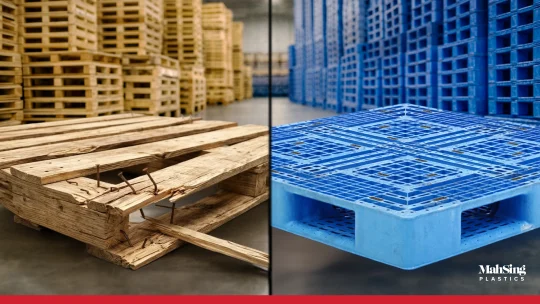 1.Eliminating Puncture Wounds and Lacerations
The lifecycle of a wooden pallet is brutal. After just a few trips, they inevitably begin to splinter, crack, and shed their fasteners.
Exposed, rusted nails and sharp wooden splinters are a leading cause of warehouse lacerations and puncture wounds. Our 100% recyclable plastic pallets feature an extra strong and solid block design that requires absolutely zero nails, screws, or staples. By removing the fasteners, you instantly remove the risk.
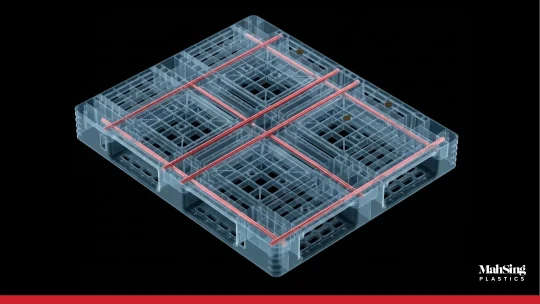 2.Preventing Catastrophic Racking Failures
When a pallet fails while suspended 30 feet in the air in a high-bay racking system, the results can be devastating.
Wooden pallets absorb moisture over time, which silently rots the core and drastically weakens their load-bearing capacity. Our heavy-duty racking pallets are immune to moisture degradation. For intense industrial applications, they utilize a cap and lock pin system that securely houses up to 8 metal bars. This prevents the deck from deflecting or bowing under immense weight, ensuring the load remains perfectly stable above your workers’ heads.
- Reducing Ergonomic Strain and Manual Handling Injuries
Musculoskeletal disorders (MSDs), such as chronic back pain and shoulder strain, are the most common injuries reported by logistics personnel.
A standard soaked wooden pallet can easily weigh over 25kg, making it a severe hazard for workers who have to manually lift, stack, or drag them across the floor. Our super lightweight export pallets are injection-molded to maintain a consistent, low tare weight, making them incredibly easy and safe for floor staff to handle manually.
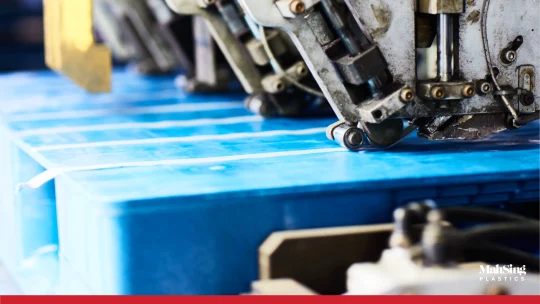 4.Safer Interactions with Automated Machinery
In automated facilities, safety hazards occur when humans have to enter the machine grid to fix a problem.
Broken wooden slats frequently trigger sensor errors or physically jam high-speed ASRS conveyors, requiring a technician to enter the hazardous automated zone to clear the debris. The dimensional consistency and zero-debris nature of our automation-ready pallets ensure seamless, uninterrupted travel, keeping your machinery running and your workers safely outside the safety fences.
Secure Your Workforce with Malaysia’s Premier B2B Manufacturer
Protecting your employees and mitigating operational liability starts from the ground up. By outfitting your warehouse with engineered plastic logistics solutions, you instantly create a safer, more efficient working environment.
Ready to upgrade your warehouse safety and reduce operational risk? Contact us with the details down below to discuss your specific logistics requirements with our B2B experts.